UAE Hospitality
8 Reasons Independent Check-in Is Becoming the New Standard in UAE Hotels
Walk into a hotel in Dubai, Abu Dhabi or Sharjah today and the front desk looks different than it did five years ago. Alongside the traditional reception, you will often see a sleek screen where guests scan a passport, tap a card and collect a room key on their own. Independent check-in is no longer a novelty, it is quickly becoming an expected part of a good stay.
Why the shift
A quieter lobby, a calmer arrival
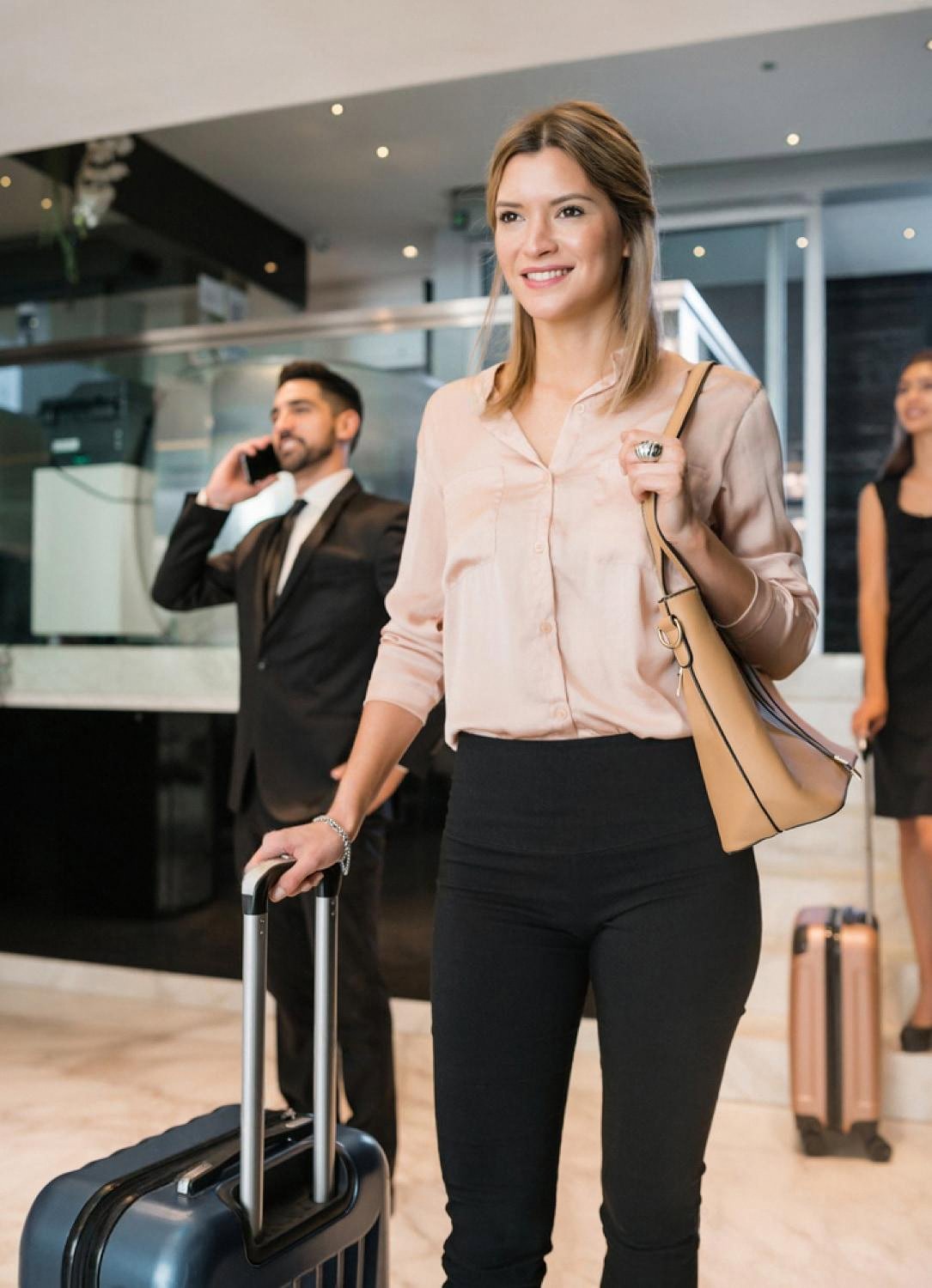
Anyone who has landed at Dubai International after a long-haul flight knows the feeling: you drag your suitcase into the lobby, spot a queue at reception, and your mood drops a notch. Long waits at the desk turn what should be a welcome into a bottleneck. Self-service terminals cut that queue in half, and the visual effect alone changes how the space feels.
There is also a deeper reason UAE properties are moving this way. Guests here arrive from dozens of countries, at all hours, often with children, sometimes at 3 a.m. from Manila or Moscow. A system that adapts to any language, any time zone and any group size is simply better matched to the reality of the market.

The eight reasons that matter most
- Shorter queues, better first impressions. When two or three guests can register in parallel at kiosks while a receptionist handles a more complex case, the queue that used to snake toward the lobby doors simply disappears. A calm lobby signals a calm hotel, and that shapes the whole stay.
- Guests choose their own path. Some travellers want a warm human welcome with a coffee and a folded map. Others just want to get to the room. A hotel check-in kiosk gives each guest the choice, without forcing anyone to switch to a channel they dislike.
- Families get a smoother arrival. Parents travelling with tired kids can register while the children watch the touchscreen and even help scan the passport. It turns a boring wait into a small activity, and children who feel involved tend to settle into the room faster.
- 24-hour arrivals work properly. A big share of UAE guests land between midnight and dawn. Kiosks stay awake when night staff are stretched thin, so a guest who arrives at 2:40 a.m. does not have to wake anyone or wait for the one clerk on duty.
- Fewer language barriers. Modern terminals switch instantly between English, Arabic, Russian, Chinese, Hindi and more. That solves a real friction point in a country where guests routinely speak a different language than the receptionist assigned to them.
- Cleaner data and fewer errors. When guests type or scan their own passport, name spellings, birth dates and visa numbers arrive in the PMS exactly as they appear on the document. That matters for MOI reporting in the UAE, where accurate guest registration is a legal requirement.
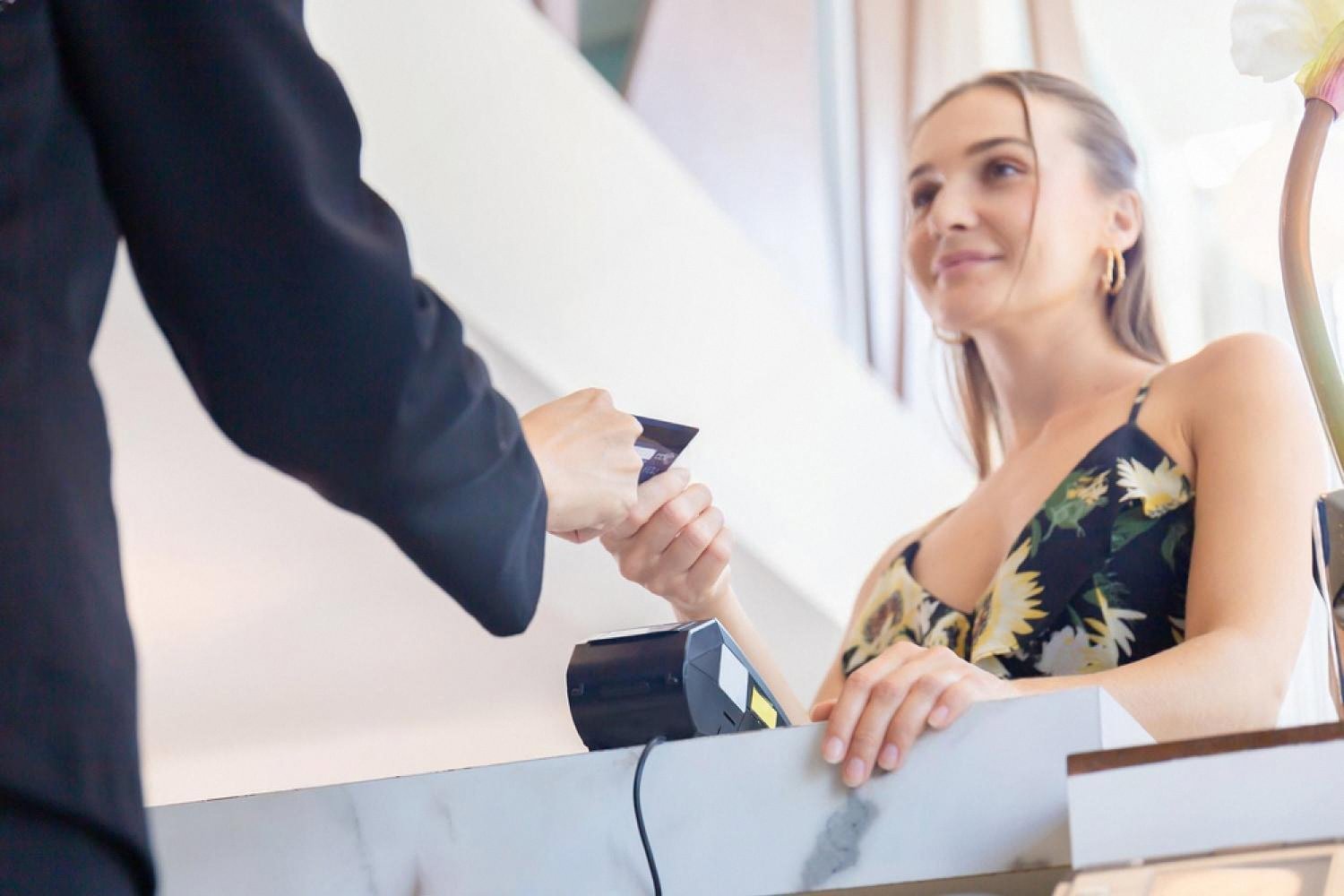
- Contactless payment and ID verification. Chip-and-PIN, Apple Pay, Emirates ID scans and passport OCR all run through the same device. Guests confirm their identity and settle the deposit without handing cards back and forth across the desk.
- Staff move from clerks to hosts. When registration takes care of itself, the person behind the desk stops being a data entry operator and starts being a concierge. That is a bigger shift than it sounds, and it changes how guests remember the hotel.
What guests gain in practice
Time back
A typical self-service registration takes under two minutes once the passport is scanned. That is the difference between reaching the room before or after the lift gets crowded with the next arriving group.
Privacy
No one behind you overhears your room number, your rate or your ID details. For business travellers and privacy-conscious guests, that alone is worth using the kiosk.
Control
Guests can review the folio, adjust a stay, add a bed or opt into loyalty perks at their own pace, without feeling rushed by a queue forming behind them.
The interesting part is what happens on the operator side. According to industry analyses by McKinsey travel research hotels that redeploy front-desk staff toward guest-facing service consistently score higher on satisfaction than properties that simply cut headcount.
That reframing changes how UAE hotels are training their teams. Instead of speed drills for check-in transactions, staff now focus on local recommendations, restaurant bookings, transfer coordination and the small requests that actually stay in a guest’s memory long after checkout.
A guest who was welcomed by name at the kiosk, then greeted by a host who already knew the room was ready, walks away with a different impression than one who spent fifteen minutes filling out a form.
Design details
Small choices that make it work
- Placement matters. Kiosks belong near the entrance in the guest’s natural line of sight, not tucked behind a pillar.
- Signage is bilingual. Arabic and English at minimum, with clear icons so no one has to read to understand.
- A staff member stands nearby. The point is not to hide humans, it is to free them up. A friendly host beside the terminal answers the first-time questions.
- Fallback to reception is one tap away. No guest should feel trapped inside a screen if something goes wrong.
Where this is heading in the UAE
Between Expo City redevelopment, the tourism targets set out in the UAE Tourism Strategy 2031 and the sheer volume of arrivals through Dubai and Abu Dhabi airports, hotels in the country have every reason to keep raising the floor on arrival experience. Independent check-in is no longer a differentiator for luxury properties, it is becoming the baseline. The hotels that adopt it thoughtfully, with strong signage, calm design and staff who genuinely act as hosts, will be the ones guests remember.
Frequently asked questions
Is independent check-in actually faster than the front desk?
For most guests, yes. A standard self-service registration takes about 90 seconds to two minutes once the passport is scanned, compared to five to ten minutes at a busy front desk. The bigger gain is that several guests can check in at once, so the queue disappears entirely at peak arrival times.
Do I still get a real welcome if I use a kiosk?
You should. In well-designed UAE hotels, a host is always positioned near the kiosks. Their job is to greet you, help with the first tap if you want it, and answer questions about the property. The kiosk handles the paperwork, the human handles the hospitality.
Are self-service kiosks secure for passport and payment data?
Reputable systems used in UAE hotels are PCI-DSS compliant for card payments and encrypt passport and Emirates ID data end-to-end. They also integrate directly with the property management system, which usually means fewer people touching your details than a manual check-in involves.
Can families or groups check in together at a kiosk?
Yes. Group and family reservations are handled through a single session, with each traveller’s ID scanned in turn. Many parents actually prefer this because children stay engaged with the screen instead of getting restless in a queue.
What happens if the kiosk cannot read my passport or booking?
Every kiosk has a one-tap route to the reception desk, and staff nearby can step in immediately. Common issues, such as a worn passport chip or a booking under a slightly different name, are usually resolved in under a minute by the on-duty agent.
Do UAE regulations allow full self-service registration?
Yes, as long as the hotel captures the guest information required by the Ministry of Interior and reports it correctly. Modern kiosks are built for this, capturing passport scans, Emirates IDs and visa details in the exact format regulators expect.
Will kiosks replace hotel front-desk staff?
No, and the better properties are explicit about this. Staff move away from data entry and into guest-facing roles like concierge work, in-room orientation and personalised service. The number of people in the lobby often stays the same, they just do more useful things.
I am a Junior Web Developer for Oswald Technologies. I am an accomplished coder and programmer, and I enjoy using my skills to contribute to the exciting technological advances that happen every day at Oswald Tech.